Gifts & divorce: what happens to presents, rings & family money
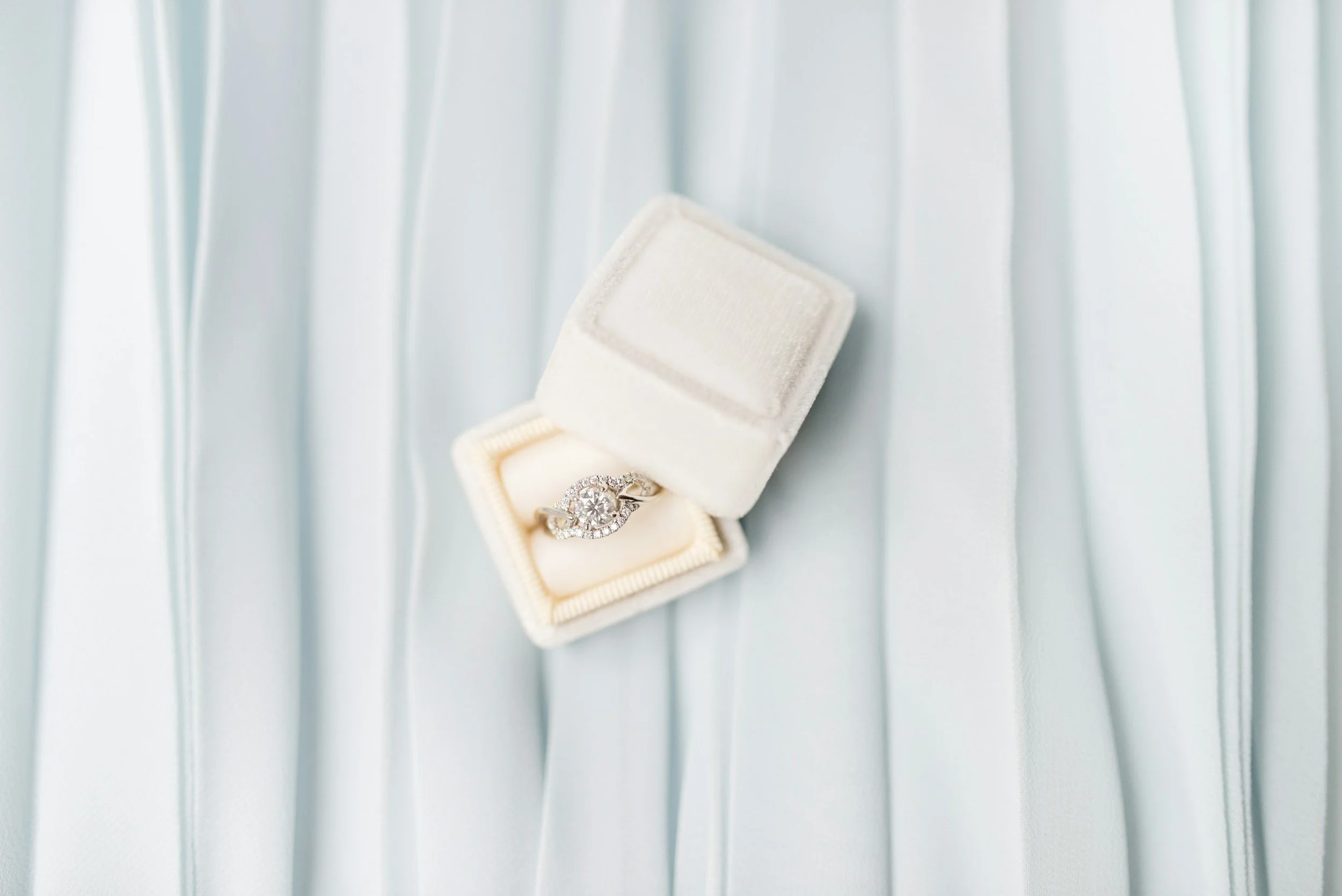
If you're wondering what happens to gifts when you get divorced, such as the engagement ring, the money your parents put towards the house, the watch you were given for a significant birthday, the answer turns almost entirely on one fact.
When it comes to divorce and gifts, it’s not about who owns it but actually where it came from.
That distinction got considerably sharper in July 2025, when the Supreme Court decided a case that changed how arguments about what happens to gifts when you’re getting divorced go.
Gifts & divorce: the short version
Gifts between the two of you - usually count as matrimonial property and go into the pot, because they were almost always bought with money the marriage generated.
The engagement ring - presumed by law to belong to whoever received it. That's ownership; whether its value figures in the settlement is a separate question.
Gifts from family to one of you alone - usually non-matrimonial, and the argument is that they sit outside the pot.
Gifts to the two of you together, including most wedding presents and a deposit from either set of parents - usually matrimonial.
But if a gift got absorbed into family life, it can be treated as shared regardless of where it started.
And if there isn't enough to meet both of your needs, a court can reach into non-matrimonial property anyway.
That’s why it’s so important to understand what you’re entitled to in a divorce.
The deciding factor with gifts & divorce
English law splits property into matrimonial and non-matrimonial. Broadly, matrimonial property is what the two of you built during the marriage, and it's the part the sharing principle applies to. Non-matrimonial property is what one of you brought in or was given personally.
Whose name something is in does not settle which category it falls into. That is the most common misunderstanding on this subject, and the Supreme Court said so directly in 2025.
Gifts between spouses
Jewellery, a car, a watch, a piece of art; things one of you gave the other during the marriage.
These are usually treated as matrimonial property and included in the settlement calculation.
But it's worth being precise about why, because the reason is not "because it was a gift." It's because the money that bought it was almost certainly money the marriage generated, such as salary, savings or joint income. The gift didn't transform anything; the asset was matrimonial in origin and stayed that way.
Which matters, because where the source wasn't matrimonial, such as a painting one of you inherited and then gave to the other, something bought with pre-marriage money, then the analysis is very different, and it's where the 2025 case comes in.
The engagement ring & wedding rings in divorce
What happens to the engagement ring and wedding rings during divorce has a statute behind it.
Under section 3(2) of the Law Reform (Miscellaneous Provisions) Act 1970, an engagement ring is ‘presumed to be an absolute gift’. The presumption can be rebutted by proving the ring was given on condition it be returned if the marriage didn't take place, which in practice arises in broken engagements, almost never in divorces.
So the ring belongs to the person who received it. They don't have to give it back, whatever happened and whoever ended it.
Wedding rings follow the same logic. Each of you keeps your own.
The distinction people miss: who owns the ring and whether its value counts are two different questions. Ownership is rarely in doubt. Value can still form part of the overall financial picture, and any individual item worth more than £500 has to be disclosed on Form E regardless, at realistic resale value rather than what was paid for it.
This isn’t to be confused with a divorce ring, which is a whole other thing.
Gifts from family in divorce
Wondering what happens to gifts given by family when you’re getting divorced?
Given to one of you alone - a car from a parent, money from a grandparent, a personal inheritance are generally considered non-matrimonial. The argument is that it should sit outside of the combined pot.
Given to the two of you together - a deposit towards a house, help with a wedding, a joint present is generally considered matrimonial, and it goes in.
Which is why it matters enormously how a gift was made and recorded at the time. "My mother gave us that" and "my mother gave that to me" can be the same transaction described two ways, three years later, by two people who now disagree about everything.
Wedding presents are usually treated as given to the couple, and therefore matrimonial. Items given specifically to one person, such as a family heirloom passed down one side, are arguable the other way.
When a gift stops being separate: matrimonialisation
A gift that started as one person's can become shared. Lawyers call it matrimonialisation.
The leading case is now Standish v Standish [2025] UKSC 26, decided unanimously by the Supreme Court on 2 July 2025. A husband transferred around £80 million, which was mostly wealth he'd built before the marriage, into his wife's sole name in 2017, as an inheritance tax plan. She was to put it into trust for their children. She never did, and the marriage ended in 2020.
The High Court held the transfer had made the money matrimonial. The Supreme Court disagreed, and set out the test:
What matters is "how the parties have been dealing with the asset and whether this shows that, over time, they have been treating the asset as shared."
And specifically on transfers made for tax reasons:
"Transfers of capital assets with the intention of saving tax do not, without some further compelling evidence, establish that the parties are treating the capital asset as shared."
The outcome: 25% of the money was matrimonial and shared; 75% wasn't. The wife received roughly £25 million rather than the £45 million awarded at first instance.
What that means for ordinary cases - as most people aren’t battling over £80 million:
Putting something in your spouse's name does not, by itself, make it shared. Intention and conduct over time are what count.
A transfer done for tax or admin reasons is not evidence of sharing.
But genuinely treating something as the family's is. Money from your mother that went into the joint account, paid down the mortgage, funded the holidays and the school fees has been treated as shared, and the longer that went on, the harder it is to pull back out.
Needs beat all of it
If the matrimonial assets aren't enough to meet both of your needs, housing above all, and particularly where there are children, a court can reach into non-matrimonial property anyway.
So establishing that a gift came from your side of the family is a good argument. It is not a guarantee. In a modest case where everything is needed to house two people who used to live in one home, the categories often end up mattering less than the arithmetic.
What to do about it
Almost all of this comes down to evidence. It’s always worth keeping a record of significant gifts - whether they hold cash or sentimental value.
Keep the paper trail. A bank transfer with a reference on it. A card. An email or a message from whoever gave it. A note made at the time.
Get the wording right when a gift is made. If family money is intended for one of you rather than both, say so in writing when it's given - not afterwards, when it looks constructed.
A gift or a loan? Family money is often described as a loan later and a gift at the time. If it's genuinely a loan, document it as one when it happens.
Watch the joint account. Money that lands in a sole account and stays there is far easier to argue about than money that went into the joint one and paid the mortgage for six years.
Disclose everything anyway. Form E is not the place to be selective. Non-disclosure that comes out later can unravel an order entirely.
Scotland and Northern Ireland
Scotland works differently, and on this subject the difference is significant. Matrimonial property there is defined by statute rather than by judicial discretion, and the definition in section 10(4) of the Family Law (Scotland) Act 1985 covers property acquired "otherwise than by way of gift or succession from a third party."
In other words, a gift or an inheritance from someone outside the marriage is excluded from matrimonial property in Scotland by the wording of the Act itself - not, as in England and Wales, by an argument a judge may or may not accept. The rules are tighter and considerably more mechanical. (The family home is treated separately, so don't read the exclusion as covering everything.)
Northern Ireland has its own system again.
If you're in either, take advice locally rather than assuming the above applies.
Last reviewed: September 2026. This page describes how gifts are treated in financial settlements in England and Wales. It isn't legal advice about your situation — and this is an area where the outcome turns heavily on individual facts, so take advice from a family solicitor who knows yours.
Looking for a present rather than a settlement? Divorce gifts is the other kind of page.
Sources:
UK Supreme Court — Standish (Appellant) v Standish (Respondent), [2025] UKSC 26, 2 July 2025.
Brodies — Standish v Standish: a summary of the Supreme Court judgment
Osbornes Law — Standish v Standish — transfer into a spouse's sole name does not automatically make an asset matrimonial; tax-saving transfers don't show sharing
Family Law (Scotland) Act 1985, s.10(4) — Matrimonial property is property acquired "otherwise than by way of gift or succession from a third party"
Law Reform (Miscellaneous Provisions) Act 1970, s.3(2) — The gift of an engagement ring shall be presumed to be an absolute gift; this presumption may be rebutted by proving that the ring was given on the condition, express or implied, that it should be returned if the marriage did not take place for any reason.
Vardags — Are gifts matrimonial or non-matrimonial? — gifts to the couple vs to one spouse; matrimonialisation through joint use
Nelsons — Gifts between spouses on divorce — courts can include non-matrimonial assets where matrimonial assets don't meet needs
Mediate UK — Who keeps the wedding ring in a divorce?